After a decade of honourable service, it is time to retire POP. A blog on populism that I started as a PhD student back in 2015 and to which I have dedicated countless hours until 2025. Meanwhile, a life has passed, many things have changed, and I find myself unable to keep alive this wonderful project. The last months have been so busy that I did not even have time to write a proper goodbye. Now that time has come.
But why is POP closing down? First, and foremost, I don’t have the capacity to devote to this blog the time it deserves to be regularly updated with excellent content. Editing, formatting, finding illustrations, uploading pictures, contacting colleagues, writing questions for the interviews and introductions for the essays I receive, announcing new publications on social media…there is a lot of work behind the scenes, that I am no longer in a condition to keep up.
Beyond that, another key reason to close this chapter is that I think it is time (for me) to move beyond populism, a buzzword that is doing more harm than good to most political analyses. In the media, among pundits, in the streets, over time populism has become a keyword that means almost everything and, therefore, almost nothing. In academia too, it often has a stale aftertaste. Don’t get me wrong: populism is real, and a lot of wonderful research about it keeps being published. Populism is certainly a phenomenon that deserves to be studied and talked about, but there are lots of reasons for me to take another path. These reasons have been explained in many posts I published on POP (and other places too) over the years.
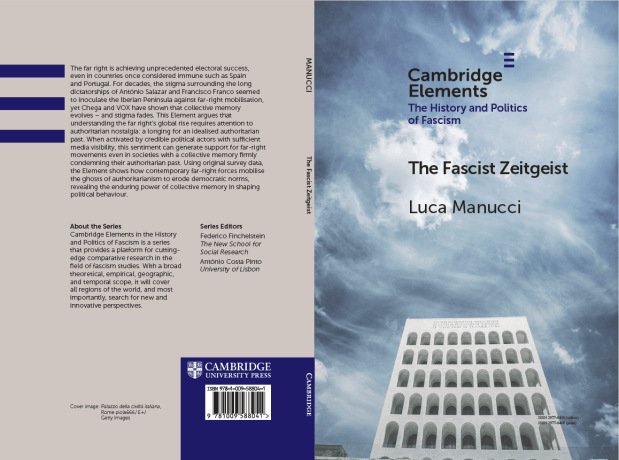
One of my main problems with “populism” is that it serves too often as a euphemism, a mask, a way to hide a bitter medicine into a sugary syrup. The truth is that during the last decade, sadly, the populist Zeitgeist has become a fascist Zeitgeist. All those “populists” who were trying to destroy democracy were, in fact, not populist at all (they could not care less about “the people” and more often than not they were part of the elites). In fact, they were far right actors. This reflection accompanied me for a long time. Then, it became a project in 2023. Today, while I write these words in September 2026, it took the form of a book.
Populism is not tied to any specific ideology; it can take any “flavour”. For this reason, it can be an emancipatory force of inclusion and participation, as well as an exclusionary rhetoric that reinforces ethnocentrism. Because it can be so many different things, it cannot be used as the sole adjective to describe far-right politicians, neo-Nazis, and extreme right troublemakers. It is not the “vox populi” if it only represents a loud minority of racists doing a pogrom in full daylight based on some fake news spread on social media. Even the more moderate “populist radical right” is—first of all—radical right and then, sometimes, not always, only if convenient, tangentially, also populist. Alternative for Germany is not voicing the legitimate concerns of “the German people” against the elites, it is normalizing racism and Islamophobia while targeting minorities, women, and political opponents. The populist mask is never the main point. That’s a massive distraction, a secondary trait, a smoke screen. Behind which one can see nostalgia for a dark past.
The Fascist Zeitgeist is a book that develops these ideas and that looks straight into the abyss. It builds a bridge between my old research and what will come, and it is only fitting that POP closes on this note. Calling the far right “populist” has done nothing but enable, normalise, and mainstream far-right ideas, discourses, and parties, bringing us one step closer to fascism and a step away from understanding populism. Amen.
Before moving on, however, I must thank a lot of people. My colleagues in Zurich, who encouraged me to open a blog while I was doing my PhD and *populism* was still a relatively niche topic. All the colleagues, friends, and authors who gave me a piece of their time to discuss their research and ideas on politics, society, democracy, and many other topics. My colleagues at ICS, where I found a new home, and who believed in this project. Routledge, for deciding that these interviews were worth publishing as a book (and to EdUERJ for having translated it into Brazilian Portuguese). Importantly, I must thank the universities that awarded POP for its outreach activities and allowed it to be online all this time.
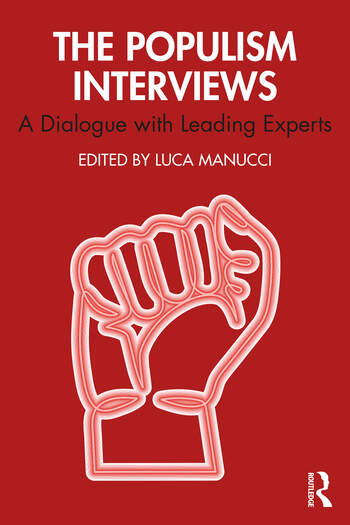
Most of all, I want to thank all those people who read any of the posts published during this decade, for each of the 100,000 (!) clicks that POP has received so far. To you, readers, thanks a lot, you kept this project alive much longer than anticipated. Also, to whoever bought and read The Populism Interviews, thank you from the bottom of my heart. If just one person has learned just one thing from all of this, it was worth it.
POP leaves behind a hostile, enshittified, AI-infested online environment. For the most part, the Internet feels like a foul, toxic swamp, a Desolation of Smaug entirely devoted to data extraction, fake news, bots, manipulation, surveillance capitalism, and so on and so forth. Getting out of here as much as possible is a necessity at this point, but it hurts because it is precisely independent blogs that keep the web alive. For example, you can read and contribute to the series on illiberalism I curate for The Loop, the ECPR’s blog. Have a look here!
Until a few years ago I thought of social media as a useful tool to spread the content published on POP, to extend the discussions generated by its posts, and make new connections. This is no longer the case. I left Twitter/X a long time ago, experimented with Mastodon, Telegram (which is now infested by horrific AI-generated far right ads, I am closing it down as well), switched to Bluesky, and cancelled my LinkedIn account too many years ago to know how it is nowadays. At the moment, POP would remain a blog without a social media presence, which would be a pity as well as a loss of outreach. But if something is “free”, we are very likely the product. And in an age where anti-fascism is considered to be a terrorist activity, our data are sensitive like never before. POP spread amazing content for a decade, and now it’s time to take a break and find new solutions, new channels, new ideas.
Meanwhile, verba volant, scripta manent. POP will continue to keep you company! The blog remains online for the foreseeable future and even if one day it will be offline, you will still be able to read all 143 posts published between 2015 and 2025 here, saved thanks to Wayback Machine –> https://manucciluca-pop.github.io/POP/.
They will remain available through a Creative Commons license: you can use any material published here as long as you cite the source and do not use it for commercial purposes. In POP’s archive you can find many amazing interviews, like the one with Cas Mudde about the 20 years of “The Populist Zeitgeist”, the chat about the mainstreaming of authoritarianism with Giorgos Katsambekis, Eviane Leidig talking about Hindutva, Aurélien Mondon and Aaron Winter explaining why Brexit and Trump are not working-class phenomena, Nicole Curato on Rodrigo Duterte, or Bianka Vida showing how the Hungarian government used gender as a rhetorical tool to strengthen its illiberal regime, and many, many more.
Several articles I wrote are also particularly important to me, such as the one about the Five Star Movement from 2017, the semiotic analysis of the Portuguese electoral billboards (part 1 and part 2), or this post about the idea of “migrants as zombies” from 2015 (thousands of desperate people at the gates of Europe in Ceuta, today like yesterday, making this post relevant once again).
A disclaimer: some of the posts won’t have pictures, inevitably many links will be broken, there are way too many links to Twitter/X that now are either inactive or will bring traffic to a morally rotten company featuring an AI chatbot that calls itself MechaHitler. Nonetheless, POP’s archive is full of content that remains extremely valuable to whoever wants to study populism or get an idea of the discourse about populism during the decade 2015-2025. Think of it as an archaeological find, where you can dig to your heart’s content. The posts will remain where they are, you will be able to continue to use their URLs, cite them, read them, recommend them.
OK, time to go. But first. A last word.
Closing POP and reducing my online presence does not mean that “I’m gone”. To the contrary. You will find me in Lisbon, or at conferences across the world. Let’s meet in person, look each other in the eyes, shake hands. Let’s stay human in the age of far-right techno billionaires. Let’s be together in the streets, rallies, festivals, protests, events, libraries.
POP is dead, long live POP!


Grazie Luca!
come stai? se passi da Forlì fa sapere! io idem se passo a Lisboa!
Ciao
Cate
LikeLike
Cate!!
Grazie, ci si vede in romagna (o nella penisola iberica 😉
Abraço,
L.
LikeLike