Re-Branding Right-Wing Politics #2 – FPÖ between ‘good’ and ‘bad’ Serbian migrants

2946275125_fcdb18bdbc_b

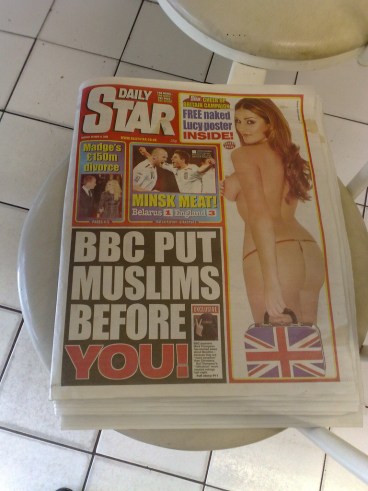
Daily Star. October 2008.

(See here the first part of the reportage. Happy new year and enjoy the first POP’s article in 2016. The schedule for the next months is pretty dense; we will take you into the very heart of contemporary populism. Follow POP on #Twitter and spread the word!).

Serbians as Well-Integrated Model Migrants

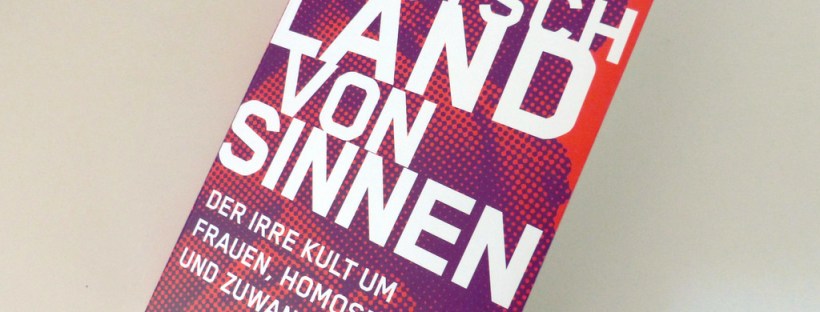
An anti-immigration party longing for migrants’ votes might sound contradictory to many, but this ‘search’ is an extension of the rhetoric of good and bad foreigners. A closer look at FPÖ’s position on Balkan politics makes this strange alliance between an anti-immigration party and Serbian migrants a little clearer. The current situation of the Balkans is an indicator of the multicultural fantasy, as its official party program writes, that descends from EU politics, whose capital infusion and political support for the central government of Bosnia-Herzegovina promote further Islamization of the Balkans. The geopolitical importance of Serbia, here, consists in its role as a buffer state between Central Europe and the Southern Balkan Peninsula; the border between Christendom and Islam. In the eyes of the ‘Freedomite’ politics, Serbia, the vanguard of the Occident in the conflict-ridden Balkans, is an example of the tragic failure of multiculturalism propagated by the European Union. Continue reading

Re-Branding Right-Wing Politics: The Freedom Party of Austria and their Serbian Migrant Supporters

Byeongsun Ahn

Byeongsung Ahn

This article, written by Byeongsun Ahn, PhD Student at the Department of Sociology of the University of Vienna, focuses on a paradoxical element of contemporary populism: the distinction between “good” and “bad” migrants. In particular, Byeongsun Ahn exposes the Austrian case, and explains why FPÖ politicians now make frequent appearances in Serbian restaurants and nightclubs, where they pose in front of Ćevapčići and dance Turbo-Folk. This is the first half of Ahn’s reportage.

Continue reading

“The worst intellectual instigator since Goebbels!”

André Haller

Dr. André Haller

This is the first article of a series about PEGIDA’s controversial messages. It is written by Dr. André Haller, who works at the Institute for Communication Science at University of Bamberg, Germany.

He will follow for POP the activities and communication strategies of PEGIDA. For an overview about the Patriotic Europeans Against the Islamisation of the Occident, see his article published in November 2015. Continue reading

Non-Interview #1 -US elections ’16

Last summer I met a person with a role in the Republican party. We had long and vibrant chat on several topics, including the next elections in the United States. Although we often disagreed, it was very enjoyable to talk and discuss together until late at night.

Recently, I thought it would have been interesting to transpose some of those discussions into an interview. The person agreed on that, so I prepared my questions.

You can find them below.

However, these questions never found an answer.

Continue reading

Interview #6 – Swiss populism and direct democracy. A talk with Laurent Bernhard

laurent

Laurent Bernhard

Last October, the Federal Swiss elections confirmed that the right-wing Swiss People Party (Schweizerische Volkspartei, SVP) is able to understand and express the population’s fears, mainly about issues such as immigration and European integration. POP asked Dr. Laurent Bernhard to discuss the Swiss situation. Dr. Bernhard is a postdoctoral researcher for the NCCR Democracy project “Populist strategies in current election campaigns” together with Prof. Marco Steenbergen. His research interests include direct democracy, comparative political economy, Swiss politics, and political communication.

1) Swiss Federal elections 2015: the Swiss People’s Party (SVP/UDC) obtains almost 30 percent of the votes, its best result ever. From a “European” perspective this may sound astonishing, since one would expect populism to score well in the context of a severe economic crisis, which is not the case for Switzerland. How do you explain this result?

Continue reading

2015: the golden year of populist leaders?

9091838291_9989e55b4b_n2015 is not finished yet, but for those interested in populism it has been a remarkably “populist year”. The economic crisis is (allegedly) coming to an end, but this is not the case for populist politicians. Let’s start our journey among populist leaders precisely from the “Eastern European tiger”: Poland.

kukiz rockstar

Paweł Kukiz

1) Vodka & Rock ‘n’ Roll

Paweł Kukiz. A right-winger with a left-wing heart, as he likes to say. A rockstar turned rightwing politician, say the media. Anti-system candidate, in practical terms. His movement scored 8.8% at the last elections in Poland, while in May Kukiz came third in the first round of the presidential elections.

He was the vocalist of the Breasts (Piersi) during the 80s and 90s, and in 2012 he launched a website to promote single-member constituencies. In a classically populist way, he claims that the Polish political structure privileges the elites at the expense of the population.

In 2010 Mr Kukiz opposed a ‘EuroPride’ homosexual march in Warsaw and was dismissive of the election in 2011 of Anna Grodzka, Poland’s first transsexual parliamentary deputy.

In three words: controversial, irresolute, engaged.

See more here and here. Continue reading

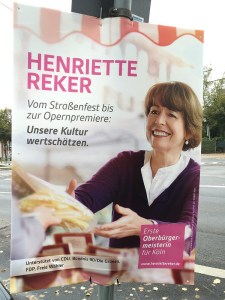
#HenrietteReker – Something is rotting in Germany (and we are not talking about Volkswagen)

Election Poster 2015

Election Poster 2015

Saturday 18th October 2015, Henriette Reker – a mayor-candidate of Cologne – was stabbed several times during a pre-election party. Reker was not only an independent – yet very promising – candidate but she also used to be in charge of the local accommodation of refugees in Cologne. Even though she and four other persons got severely injured, she won the election the next day.

So what’s the story behind the attack? The offender claims Reker’s refugee policy to be the cause: “By killing her, I wanted to do Germany a favor”. Now we know that his motives were xenophobic, and that he was connected to a – nowadays forbidden – right-wing extremist organization called Liberal German Worker’s Party[1].

An attempted murder motivated by someone’s refugee policy must be a meaningful wake-up call for Germany. So far, this gesture remained an isolated incident. However it is very important to ask: how did we come to this? Continue reading

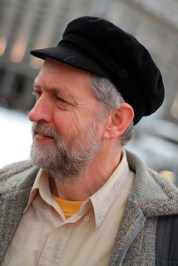
To the left, to the left: Jeremy Corbyn and the British return to left-wing populism

Jeremyn Corbyn

Jeremy Corbyn

Social democracy itself was exhausted.  Dead on its feet.  Yet something new and invigorating, popular and authentic has exploded.  To understand this all of us have to share our ideas and our contributions.  Our common project must be to embrace the emergence of a modern left movement and harness it to build a society for the majority” 

Jeremy Corbyn’s speech, September 2015

Laura Mackenzie‘s new article for POP presents the new leader of the Labour Party, Jeremy Corbyn. Is Britain’s left-wing party following the examples of Spain and Greece? Is populism (re)becoming a relevant part of British politics, from Farage to Corbyn? Let’s try to answer these and other questions with Laura Mackenzie’s article. Continue reading

Interview #5 – Ruth Wodak: The Politics of Fear. What Right-Wing Populist Discourses Mean

ruth_wodak

Professor Ruth Wodak

Ruth Wodak is Emeritus Distinguished Professor and Chair in Discourse Studies at Lancaster University. Her research is mainly located in Discourse Studies and Critical Discourse Analysis. She elaborated the Discourse Historical Approach, an interdisciplinary approach to analysing the change of discursive practices over time and in various genres.

She recently published with Sage her last book. The Politics of Fear – What Right-Wing Populist Discourses Mean.

It is with pleasure that POP asked her some questions about the discourse of contemporary populism compared to that of radical right wing parties, as well as about left wing populism, and the role of the mainstream parties. Enjoy the conversation with professor Wodak. Continue reading

Zombies in Fortress Europe: the migrants as a metaphor

Lega Nord _ Abbiamo fermato l'inavsione (We stopped the invasion)

Lega Nord _ Abbiamo fermato l’inavsione (We stopped the invasion)

“In its contemporary manifestations, the migrant figure has been imagined variously as a mechanical, animalistic, spectral, zombified, vampiric or cyborg entity”

   Nikos Papastergiadis

The frame used by politicians and mass media to describe migrants and refugees recalls the tradition of horror movies. A devilish, dangerous, elusive and relentless presence threatens the borders. They come from the sea.

Zombies.

A shapeless horde, a scary multitude.

The zombies are what we do not (want to) understand. They are the American Indians, the slum dwellers, the colonized, Iraqis and Afghans, Eritreans. They are the by-product of an (internal and external) Apartheid imposed by relationships of strength.

The doors of the fortress (or hotspots) are the critical junctures of the system, the crumbling bastions of a civilization under siege: Melilla, Lesbo, Ventimiglia, Calais, Budapest, the Eurotunnel, Lampedusa. Between land and water, the entrance to “heaven” is strewn with rotting corpses, and the stench goes straight to the nostrils of all. Continue reading