Aurelien Mondon’s primary research currently focuses on neo-racism, Islamophobia and right-wing populism, and their impact on liberal democracies. More detail can be found here and here. He is Lecturer in French and comparative politics working on racism, populism, the far right and the crisis of democracy at the University of Bath. I asked him some general questions about populism, democracy, resistance and revolutions.
Let’s start by placing populism in its historical context. Is it still possible to claim that populism means ‘giving power to the people’, or nowadays even those who vote for populist parties know that they are actually delegating their power to (more or less) charismatic leaders and parties?
You can generate your random austerity measures from the comfort of your hammock.
Another aspect of this grotesque situation, is the controversial reply of Angela Merkel to a fourteen-year-old refugee. Merkel, accused of having humiliated Tsipras, had then to face the critiques for her reply to the young girl. I found the critiques to Merkel out of focus. She has not been mean. She has not been hypocritical. She just defended her policies on migration. She told the young Palestinian that Germany cannot host all the migrants. She did not make an exception for electoral purposes, even if that would have been easy. She didn’t say: we don’t want migrants, but since you’re here, in front of me, and you’re cute, and you’re crying, I will make an exception and let you come with your family. One can argue that the German policy about migrants is wrong, but not that Merkel has been mean. Here a good analysis of the New Yorker: http://www.newyorker.com/news/amy-davidson/merkel-and-the-crying-girl-five-lessons
In case you didn’t see it yet, you can judge by yourself:
POP goes on holidays for a while. The last suggestion for now is to read this interesting article from The Telegraph. The title is self-explanatory: Republican race has the flavour of ‘populism on crack’.
Why populism in Scandinavia seems to be more and more successful? What can explain the presence of right-wing populist parties in governing coalitions in Finland, Denmark, and Norway, while in Sweden Sverigedemokraterna doubled its consensus from last elections becoming the third party?
In order to answer these questions, POP decided to interview Anders Hellström. He is associate professor in political science, currently based at the Malmö Institute for studies of diversity, migration and welfare. He chairs a comparative project on Nordic populism, funded by NOS-HS in the period 2013–2015. A new book will be published by Berghahn Books later this year. It will be titled “Trust Us: Reproducing the Nation and the Scandinavian Nationalist Populist Parties“. He has written several books and articles about Populism and nationalism in relation to European integration, identity politics, discourse theory and the nationalist populist parties in Sweden and elsewhere.
Hot summer in Europe. Tsipras asked the Greek people to refuse the conditions of the Troika – and the Greek people answered “oxi”, which is translated as “no” but in this case means “yes Alexis, we’re still with you”; Varoufakis announced – first via Blog and then in T-shirt, cool as usual – that he resigns from his position as Minister in order to help Tsipras with the negotiations; Spain approved a package of measures unprecedented during its democratic history, limiting freedom of expression and public protest; Hungary is preparing to build yet another wall of this Europe under siege, to halt the advance of the refugees on the eastern front.
The Greek referendum marked a watershed in the history of Europe, with consequences that will be fully understood probably in the next decades. Now it’s too early to draw conclusions. The words of Varoufakis from his blog are probably the best way to reflect on what happened: “The superhuman effort to honour the brave people of Greece, and the famous OXI (NO) that they granted to democrats the world over, is just beginning.”
Laura Mackenzie‘s new article for POP investigates the different results of UKIP and the British National Party over time. What does explain their opposite degrees of normalization and success within the British political landscape?
“We are saying to BNP voters, if you are voting BNP because you are frustrated, upset with the change in your community, but you are doing it holding your nose, because you don’t agree with their racist agenda, come and vote for us”. Thus spake Nigel Farage, leader of the UK’s largest populist party, the United Kingdom Independence Party (UKIP), in 2014.
Since then, Farage has claimed to have taken a third of supporters from the populist radical right British National Party (BNP), and his party is enjoying its highest ever level of support since its creation in 1993, having received over 12% of the national vote (nearly 4 million votes) at the general election held on 7th May 2015. In contrast, the BNP received just over 1,500 votes, down 99.7% since the last general election in 2010. Is this downward trend in support for the BNP evidence that UKIP has made good on its promises to be the voice of those who are “frustrated [and] upset with the change in [their] community”? Or has this declining interest merely indicated an inability of the BNP to achieve lasting political and social legitimacy?
The BNP was formed in 1982, based on the principles of the original National Front: national sovereignty; withdrawal from the European Economic Community; a reconfiguration of the British Commonwealth into an association of white ethnic groups; enforced repatriation of non-Europeans; economic nationalism; etc. The party failed to make any headway throughout the Margaret Thatcher years in the 1980s and early 1990s, with collective support for the far right averaging at approximately 1% during this period. The party was characterised by an incoherent electoral strategy, contesting elections sporadically and finding support inconsistent at the local level (in 1984, a BNP candidate polled almost 12% of the vote in a council by-election in Sunderland, in the north of England; in contrast, in a by-election in Plymouth in the south in the same year, another candidate received only 15 votes).
Father Coughlin knew how to use the radio and he used it to deliver his messages to millions of people. First he supported Roosevelt and the New Deal, but later criticized him because of his relationships with the bankers. I would be curious to interview Charles Edward Coughlin now, in 2015, and to listen from his energetic, mesmerizing voice, what he thinks about the situation in Europe. Another cycle of economic recession, another time of social unrest. An age of barriers, drifting boats, night marches, proclamations.
Father Coughlin was particularly harsh with Jewish bankers, accused of being behind the Russian Revolution, and ended up backing Adolf Hitler and Benito Mussolini concerning social and political measures against both capitalism and Communism.
At the Congress, he once said, it is time to endorse a candidate ‘who can rise above his party and puts patriotism first. He may be a Democrat or a Republican or whatnot, but we’re through with the sham battle of politicians and now we’re on our own’.
In 2015, in Europe, it is time for important decisions, and the soul of Coughlin’s speeches resonates with our time, ominously, through new politicians. About democracy, and the way it was not able to prevent the great Depression, he said: ‘somebody must be blamed, of course. But those in power always forget to blame themselves. (…) And democracy once more, thinking that it has power within its soul, shall rise up to clap and applaud, because the youth of the land is going abroad to make the world safe for what? Safe for dictatorship? Safe against communism abroad when we have communism at home? Safe from socialism in France when we have socialism in America? Or safe, safe for the international bankers?’
I wanted to talk about the last elections in Poland and in Spain, about PEGIDA in Germany and Salvini in Italy, but there will be time for that. Now, I just wanted to hear father Coughlin’s words again, because those who cannot learn from history are doomed to repeat it.
Will Finland join the ‘club’ of the European countries which include a populist party in their government?
A few days more and we will have the answer.
For sure, something changed in Scandinavia after the results of the Swedish Democrats in September 2014 and the Finnish elections last week. Moreover, in 2014 the Danish People’s Party received 26,6% of the votes for the European Parliament, more than any other Danish party, and the Progress Party in Norway became for the first time part of the government in 2013, even if it obtained better results in previous elections. Continue reading →
This is the first of many interviews that POP will propose in the next months. Scholars, journalists, politicians and experts will answer timing questions about the nature and development of populism. For this first interview, we have Samuele Mazzolini. He is a PhD candidate in Ideology and Discourse Analysis at the University of Essex. His research focuses on the declining hegemony of the Italian Left, read through the lenses of post-Marxist discourse theory. He is also interested in Latin American and European left-wing populism. He previously worked for the Ecuadorian government and is now a regular columnist of the state-owned daily newspaper El Telégrafo. He is also a blogger for the Italian newspaper Il Fatto Quotidiano.
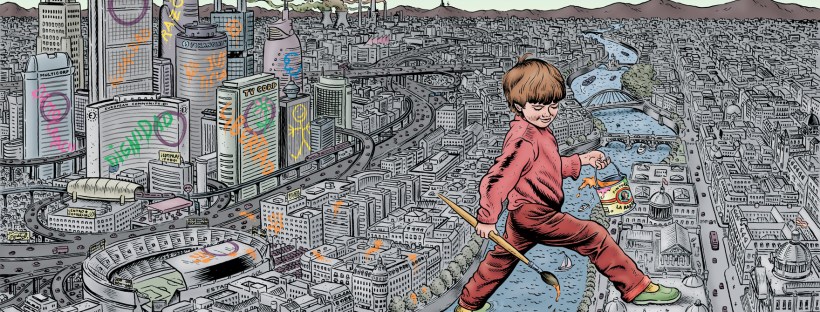
What is going on in Germany? The country which is supposed to lead European’s economy is plagued by anti-Muslim movements like Pegida, several important strikes (the last one from the Lufthansa pilots), and today the Blockupy movement protests in Frankfurt. They demonstrate against the inauguration of the headquarters of the European Central Bank, hosted in the new Eurotower.
Blockupy is an anti-capitalist network including around 90 organizations from several European countries, showing interesting similitudes of style and content with the protests against the WTO in Seattle in 1999.
With a populist touch, they want to ”draw attention to ECB policies which, they say, have favored the rich over the poor, the banks over the people, the creditor class over debtors – policies that have amounted to bailing out irresponsible financiers at the expense of ordinary citizens”.
It is really hard to understand Occupy Wall Street if you never heard of the French Revolution. It is equally unlikely to appreciate Jackson Pollock if you are not familiar with Kandinsky and the other expressionists. You may even occur in the same mistake of the critic Robert Coates, who once mocked a number of Pollock’s works as “mere unorganized explosions of random energy, and therefore meaningless”.
All in all, however, you don’t need to be a historian or an art critic in order to decrypt the reality around you. There is a more general rule you can always apply: the world can be divided in two big categories – people who have a certain sense of humour, and those who take themselves too seriously.
You can understand the relationship between the Islamic State and Pegida, via Nigel Farage, if you bear in mind this distinction.

 Aurelien Mondon’s primary research currently focuses on neo-racism, Islamophobia and right-wing populism, and their impact on liberal democracies. More detail can be found here and here. He is Lecturer in French and comparative politics working on racism, populism, the far right and the crisis of democracy at the University of Bath. I asked him some general questions about populism, democracy, resistance and revolutions.











 What is going on in Germany? The country which is supposed to lead European’s economy is plagued by anti-Muslim movements like



 POP
POP 