2015: the golden year of populist leaders?

9091838291_9989e55b4b_n2015 is not finished yet, but for those interested in populism it has been a remarkably “populist year”. The economic crisis is (allegedly) coming to an end, but this is not the case for populist politicians. Let’s start our journey among populist leaders precisely from the “Eastern European tiger”: Poland.

kukiz rockstar

Paweł Kukiz

1) Vodka & Rock ‘n’ Roll

Paweł Kukiz. A right-winger with a left-wing heart, as he likes to say. A rockstar turned rightwing politician, say the media. Anti-system candidate, in practical terms. His movement scored 8.8% at the last elections in Poland, while in May Kukiz came third in the first round of the presidential elections.

He was the vocalist of the Breasts (Piersi) during the 80s and 90s, and in 2012 he launched a website to promote single-member constituencies. In a classically populist way, he claims that the Polish political structure privileges the elites at the expense of the population.

In 2010 Mr Kukiz opposed a ‘EuroPride’ homosexual march in Warsaw and was dismissive of the election in 2011 of Anna Grodzka, Poland’s first transsexual parliamentary deputy.

In three words: controversial, irresolute, engaged.

See more here and here. Continue reading

#HenrietteReker – Something is rotting in Germany (and we are not talking about Volkswagen)

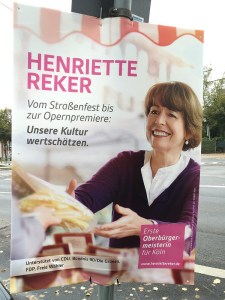
Election Poster 2015

Election Poster 2015

Saturday 18th October 2015, Henriette Reker – a mayor-candidate of Cologne – was stabbed several times during a pre-election party. Reker was not only an independent – yet very promising – candidate but she also used to be in charge of the local accommodation of refugees in Cologne. Even though she and four other persons got severely injured, she won the election the next day.

So what’s the story behind the attack? The offender claims Reker’s refugee policy to be the cause: “By killing her, I wanted to do Germany a favor”. Now we know that his motives were xenophobic, and that he was connected to a – nowadays forbidden – right-wing extremist organization called Liberal German Worker’s Party[1].

An attempted murder motivated by someone’s refugee policy must be a meaningful wake-up call for Germany. So far, this gesture remained an isolated incident. However it is very important to ask: how did we come to this? Continue reading

To the left, to the left: Jeremy Corbyn and the British return to left-wing populism

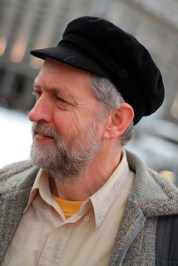
Jeremyn Corbyn

Jeremy Corbyn

Social democracy itself was exhausted.  Dead on its feet.  Yet something new and invigorating, popular and authentic has exploded.  To understand this all of us have to share our ideas and our contributions.  Our common project must be to embrace the emergence of a modern left movement and harness it to build a society for the majority” 

Jeremy Corbyn’s speech, September 2015

Laura Mackenzie‘s new article for POP presents the new leader of the Labour Party, Jeremy Corbyn. Is Britain’s left-wing party following the examples of Spain and Greece? Is populism (re)becoming a relevant part of British politics, from Farage to Corbyn? Let’s try to answer these and other questions with Laura Mackenzie’s article. Continue reading

Interview #5 – Ruth Wodak: The Politics of Fear. What Right-Wing Populist Discourses Mean

ruth_wodak

Professor Ruth Wodak

Ruth Wodak is Emeritus Distinguished Professor and Chair in Discourse Studies at Lancaster University. Her research is mainly located in Discourse Studies and Critical Discourse Analysis. She elaborated the Discourse Historical Approach, an interdisciplinary approach to analysing the change of discursive practices over time and in various genres.

She recently published with Sage her last book. The Politics of Fear – What Right-Wing Populist Discourses Mean.

It is with pleasure that POP asked her some questions about the discourse of contemporary populism compared to that of radical right wing parties, as well as about left wing populism, and the role of the mainstream parties. Enjoy the conversation with professor Wodak. Continue reading

Crisis of a midsummer night

Donald Trump

Donald Trump

This blog wants to show also the paradoxical, extreme, funny, and soft aspects of complex political phenomena.

This is why, if one is prepared to cast an amused look to the Greek crisis, this link is phenomenal:

http://www.random-austerity-measure-generator.com/#

You can generate your random austerity measures from the comfort of your hammock.

random austerity varoufakis

Another aspect of this grotesque situation, is the controversial reply of Angela Merkel to a fourteen-year-old refugee. Merkel, accused of having humiliated Tsipras, had then to face the critiques for her reply to the young girl. I found the critiques to Merkel out of focus. She has not been mean. She has not been hypocritical. She just defended her policies on migration. She told the young Palestinian that Germany cannot host all the migrants. She did not make an exception for electoral purposes, even if that would have been easy. She didn’t say: we don’t want migrants, but since you’re here, in front of me, and you’re cute, and you’re crying, I will make an exception and let you come with your family. One can argue that the German policy about migrants is wrong, but not that Merkel has been mean. Here a good analysis of the New Yorker: http://www.newyorker.com/news/amy-davidson/merkel-and-the-crying-girl-five-lessons

 In case you didn’t see it yet, you can judge by yourself: 

POP goes on holidays for a while. The last suggestion for now is to read this interesting article from The Telegraph. The title is self-explanatory: Republican race has the flavour of ‘populism on crack’.

Here you go: http://www.telegraph.co.uk/news/worldnews/us-election/11734022/Republican-race-has-the-flavour-of-populism-on-crack.html

Have a good summer folks.

“When libertarian sentiments take a populist form, it looks like this: a mix of anger, fear, anti-intellectualism, and fierce government hostility. Welcome to the Tea Party movement.”
David Niose, Fighting Back the Right: Reclaiming America from the Attack on Reason

Interview #3 – Anders Hellström about Nordic Populism

Anders Hellström

Anders Hellström

Why populism in Scandinavia seems to be more and more successful? What can explain the presence of right-wing populist parties in governing coalitions in Finland, Denmark, and Norway, while in Sweden Sverigedemokraterna doubled its consensus from last elections becoming the third party?

In order to answer these questions, POP decided to interview Anders Hellström. He is associate professor in political science, currently based at the Malmö Institute for studies of diversity, migration and welfare. He chairs a comparative project on Nordic populism, funded by NOS-HS in the period 2013–2015. A new book will be published by Berghahn Books later this year. It will be titled “Trust Us: Reproducing the Nation and the Scandinavian Nationalist Populist Parties“. He has written several books and articles about Populism and nationalism in relation to European integration, identity politics, discourse theory and the nationalist populist parties in Sweden and elsewhere.

Continue reading

Oxi, ley mordaza, walls and summer populism

2015-06-27 18.47.15Welcome to the Bistro POP. 2015-06-27 21.47.28

We serve fresh populism, of all types.

Hot summer in Europe. Tsipras asked the Greek people to refuse the conditions of the Troika – and the Greek people answered “oxi”, which is translated as “no” but in this case means “yes Alexis, we’re still with you”; Varoufakis announced – first via Blog and then in T-shirt, cool as usual – that he resigns from his position as Minister in order to help Tsipras with the negotiations; Spain approved a package of measures unprecedented during its democratic history, limiting freedom of expression and public protest; Hungary is preparing to build yet another wall of this Europe under siege, to halt the advance of the refugees on the eastern front.

The Greek referendum marked a watershed in the history of Europe, with consequences that will be fully understood probably in the next decades. Now it’s too early to draw conclusions. The words of Varoufakis from his blog are probably the best way to reflect on what happened:  “The superhuman effort to honour the brave people of Greece, and the famous OXI (NO) that they granted to democrats the world over, is just beginning.”

Continue reading

#Regional Italian Elections ’15: numbers and considerations

One can read the results of the elections in seven Italian regions from a national perspective, even if this is an exercise that does not guarantee any consistent prediction. However, it can provide some important clues of what will happen in the future.

sky tg 24 results venetoFirst of all, the results in the figure below are not complete. In fact, the results of single parties are not there: in regional elections, mainstream parties are linked to small local coalitions and minor parties. Therefore, the candidates of major parties always receive support from other lists, and the single party (e.g. Lega Nord in Veneto: 17.82% out of a total 50.08%) scores lower than that shown in the chart. Continue reading

Poaching populists: is UKIP rising as a phoenix from the ashes of BNP support?

10438765746_e96d4b2bc8_hLaura Mackenzie‘s new article for POP investigates the different results of UKIP and the British National Party over time. What does explain their opposite degrees of normalization and success within the British political landscape?

We are saying to BNP voters, if you are voting BNP because you are frustrated, upset with the change in your community, but you are doing it holding your nose, because you don’t agree with their racist agenda, come and vote for us”. Thus spake Nigel Farage, leader of the UK’s largest populist party, the United Kingdom Independence Party (UKIP), in 2014.

Since then, Farage has claimed to have taken a third of supporters from the populist radical right British National Party (BNP), and his party is enjoying its highest ever level of support since its creation in 1993, having received over 12% of the national vote (nearly 4 million votes) at the general election held on 7th May 2015.  In contrast, the BNP received just over 1,500 votes, down 99.7% since the last general election in 2010.  Is this downward trend in support for the BNP evidence that UKIP has made good on its promises to be the voice of those who are “frustrated [and] upset with the change in [their] community”?  Or has this declining interest merely indicated an inability of the BNP to achieve lasting political and social legitimacy?

The BNP was formed in 1982, based on the principles of the original National Front: national sovereignty; withdrawal from the European Economic Community; a reconfiguration of the British Commonwealth into an association of white ethnic groups; enforced repatriation of non-Europeans; economic nationalism; etc.  The party failed to make any headway throughout the Margaret Thatcher years in the 1980s and early 1990s, with collective support for the far right averaging at approximately 1% during this period.  The party was characterised by an incoherent electoral strategy, contesting elections sporadically and finding support inconsistent at the local level (in 1984, a BNP candidate polled almost 12% of the vote in a council by-election in Sunderland, in the north of England; in contrast, in a by-election in Plymouth in the south in the same year, another candidate received only 15 votes).

Continue reading

Ghosts from the past

CharlesCouglinFather Coughlin knew how to use the radio and he used it to deliver his messages to millions of people. First he supported Roosevelt and the New Deal, but later criticized him because of his relationships with the bankers. I would be curious to interview Charles Edward Coughlin now, in 2015, and to listen from his energetic, mesmerizing voice, what he thinks about the situation in Europe. Another cycle of economic recession, another time of social unrest. An age of barriers, drifting boats, night marches, proclamations.

Father Coughlin was particularly harsh with Jewish bankers, accused of being behind the Russian Revolution, and ended up backing Adolf Hitler and Benito Mussolini concerning social and political measures against both capitalism and Communism.

At the Congress, he once said, it is time to endorse a candidate ‘who can rise above his party and puts patriotism first. He may be a Democrat or a Republican or whatnot, but we’re through with the sham battle of politicians and now we’re on our own’.Kill the lie

In 2015, in Europe, it is time for important decisions, and the soul of Coughlin’s speeches resonates with our time, ominously, through new politicians. About democracy, and the way it was not able to prevent the great Depression, he said: ‘somebody must be blamed, of course. But those in power always forget to blame themselves. (…) And democracy once more, thinking that it has power within its soul, shall rise up to clap and applaud, because the youth of the land is going abroad to make the world safe for what? Safe for dictatorship? Safe against communism abroad when we have communism at home? Safe from socialism in France when we have socialism in America? Or safe, safe for the international bankers?

I wanted to talk about the last elections in Poland and in Spain, about PEGIDA in Germany and Salvini in Italy, but there will be time for that. Now, I just wanted to hear father Coughlin’s words again, because those who cannot learn from history are doomed to repeat it.