Interview #68 – Alternative for Germany and the “Weaponization” of History

The rise of populist radical right movements goes hand in hand with the politicization of history. Historical narratives are powerful tools that can shape public perception, reinforce ideologies, and legitimize political agendas. Focusing on the Alternative for Germany (AfD), we discuss with Matthias Dilling and Félix Krawatzek how the party’s strategic engagement with Germany’s collective memory intersects with broader trends in Europe and beyond.

From Milei’s nostalgic vision for Argentina to Romania’s recent electoral scandals that brought back echoes of the country’s fascist and communist past, history is a battleground for defining national identity and social values.

The interview sheds light on the role of the past in shaping the future, offering critical insights into the challenges posed by historical revisionism and the opportunities for fostering a more informed public discourse.

Enjoy the read…

Continue reading

Interview #65 – AfD and the end of German Exceptionalism

Germany has long been viewed as *the* model for reckoning with past atrocities—particularly through its atonement for the Holocaust and the creation of a public space steeped in historical reflection and contrition. Unlike Italy, for example, Germany has made its national memory a central pillar of its identity. However, this commitment to remembrance is now producing some unforeseen challenges.

For example, the legacy of the Holocaust makes critical public discussions about the actions of the Israeli government very difficult. At the same time, antisemitism, which has never fully disappeared, is once again on the rise.

In November 2023, members of the far-right party AfD were caught in a secret meeting discussing a “master plan” for the mass deportation of foreigners and “non-assimilated” Germans. When the news broke in January 2024, over a million people took to the streets across Germany to protest extremism and AfD’s ideology.

While the widespread mobilization in defense of democracy is heartening, it’s equally concerning that a party like AfD—which would have been considered taboo just a decade ago—has not only gained traction but may even be poised for government in the near future.

So, how did AfD become the third-largest political force in Germany? And is the country’s democratic cordon sanitaire strong enough to hold?

This interview delves into these questions and more with political expert Manès Weisskircher.

Enjoy the read.

Continue reading

Interview #49 — Dealing with the past and the politics of memory

In this interview, Geneviève Zubrzycki explains how invented traditions constitute a pillar of modern nations and therefore how collective memories can help us understand modern nationalism. Memory is utterly political, she told POP, since it gives an explanation to collective questions about identity, who we are are where do we go.

From there, we discuss the universalization of the Holocaust and the German process of Vergangenheitsbewältigung, the Polish case and the efforts of Law and Justice to remythologize collective memories through a paradigm of victimhood. We then analyze the concept of “Christian heritage” and its implications, and discuss how the election of Donald Trump and the Black Lives Matter movement reopened in the US a discussion about the legacy of slavery and reparations, the meaning of the Confederacy and its symbols in the South.

Enjoy the read.

Continue reading

Interview # 26 – Populism and the future of democracy

A new interview addressing many thorny issues of contemporary democracy. Left-wing populist movements across the globe, malfunctions of representative democracy, the dialectic between people and politicians, horizontal and vertical dimensions of populist mobilisation, the potential democratic renewal inherent in forms of direct democracy, the future of social democracy. This, and much more, in a fluvial chat with Giorgos Katsambekis. 

Continue reading

The Fall and Rise of AfD: Windows of Opportunity and Political Culture

Dr. André Haller analyses the ideological evolution of Alternative for Germany (AfD) and its communicative strategy, the role played by the so called ‘refugees crisis’, and the possibility for right-wing populism to finally thrive in Germany, immune to right-wing populist Pied Pipers since the aftermath of World War II.


Continue reading

Three Lessons From Contemporary Populism

2015 seemed like the perfect year for populist actors. All over the world more or less populist discourses were spread among the public opinion. In 2016 the diffusion of populism reached new and unexpected peaks. What changed in the diffusion and perception of populism? Essentially, there are three lessons we can learn. Continue reading

Donald Trump: the Perfect President for the Divided States of Europe?

On March 13th the elections in three German regions brought once again on the table a fundamental question about Europe: will we be able to overcome our fears and open our political-economic project also to those that so far have been excluded? Or will we rather entrench ourselves in our fortress?

It is time to define our collective identity. And it is time to consider that the way we are doing it now will be marked in history books as one of the biggest European shames.

In other words: let’s imagine that we have to elect a supreme leader for Europe in 2017. Let’s assume Donald Trump would participate. Would he win the elections? Continue reading

Why Scandals are vital in Populist Communication

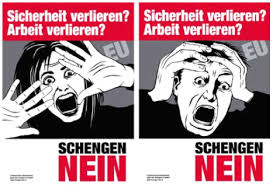
shengen nein

SVP poster against Schengen, 2006. Security and freedom would get lost if Switzerland remains in the Schengen area.

Today Dr. André Haller explores a peculiar populist communication strategy: self-scandalization. While he keeps updating POP about the controversial positions of the anti-Muslim group PEGIDA, he also explains us how populist parties and movement create, exploits and take advantage of manufactured political scandals.

Continue reading

“The worst intellectual instigator since Goebbels!”

André Haller

Dr. André Haller

This is the first article of a series about PEGIDA’s controversial messages. It is written by Dr. André Haller, who works at the Institute for Communication Science at University of Bamberg, Germany.

He will follow for POP the activities and communication strategies of PEGIDA. For an overview about the Patriotic Europeans Against the Islamisation of the Occident, see his article published in November 2015. Continue reading

The new German “Wutbürger” – A short history of PEGIDA

POP will not write anything about the attacks in Paris. Jacobin magazine published a very important article about the politicization of these events, asking – among other considerations – why a similar attack in Beirut originated very different reactions.

André Haller

Dr. André Haller

For the moment POP inaugurates a PEGIDA-related series of articles written by Dr. André Haller, who works at the Institute for Communication Science of the Bamberg University, Germany. His research interests include self-scandalization in the media, electoral campaign communication, and data driven journalism.

Even if it might seem tactless to mention something that is not #Paris, talking about PEGIDA and its historical development means casting a sideways glance on those events: when Islamic terrorism looks in the mirror, in fact, the image of a patriot against the Islamization of the West appears.

Dr. Haller introduces the basic aspects of the movement “Patriotic Europeans Against the Islamization of the Occident”, and he will periodically send updates about the controversial utterances of PEGIDA’s leaders and members. In order to understand Paris and Beirut, the debate about the migrants and the barbed wires, the bombings on Raqqa and the role of Russia in Syria, one should look carefully at the story and development of a movement which is the result of the current Zeitgeist: PEGIDA. Continue reading