
In this article, Lisa Gaufman presents her (open access) book The Trump Carnival: Populism, Transgression and the Far Right, written with Bharath Ganesh.
Donald Trump’s political philosophy is often overshadowed by the sheer volume of his controversies. Yet at its heart lies a carnival of transgressions—norm-breaking, taboo-violating, and hierarchy-flipping—that has shaped the far-right’s approach to democracy.
As his rhetoric grows bolder and his disregard for rules extends from domestic to foreign policy, understanding the Trump carnival is essential to grasp the erosion of democratic norms in the U.S. and beyond.
His imperialist designs are part of a broader approach to politics, democracy, and foreign policy.
Enjoy the read…
With the relentless torrent of news about Trump, it’s difficult to keep track of all the outrageous things he says and does. His recent, vocal attempts at land grabs—rhetorical for now, though things might escalate in the future—are already being normalized in both right-wing and mainstream media. This makes it critical to examine the core of Trump’s political philosophy, whether we consider it a conscious decision or just the result of chaos.
To do so, the concept of “carnival” is crucial. It rarely enters foreign policy discussions, but Mikhail Bakhtin’s work on the political dimension of carnival offers valuable insight into the mechanisms of populism. Carnival is about norm-breaking and perceived reversal of the hierarchy, where “real people” take the power from the “corrupt elite” (sounds familiar?). It’s about gorging yourself and laughing at everything, embracing excess and mockery.

In The Trump Carnival: Populism, Transgression, and the Far-Right, Bharath Ganesh and I argue that one hallmark of the Trump phenomenon is the legitimization of transgression: transgression becomes a value in and of itself. In this context, populism thrives on its transgressive character—both in voicing taboos imposed by elites and in encouraging their violation.
Trump’s carnival creates a space where violations are not only permitted but celebrated. These violations, however, reveal the specific type of populist Trump represents. His carnival is fundamentally anti-democratic. As its ringleader and fool, Trump’s transgressions—boasting about sexual assault, and mocking political correctness—serve as invitations for others to follow suit.
Trump’s carnival revels in collective violations of democracy itself, finding joy in undermining equality and representation. It empowers a group that mythologizes itself as a victim for losing dominance over others. We argue that this transgressive ethos is central to today’s far-right, which uses play, laughter, and misogyny to erode democracy while glorifying its destruction.
Two moments from Trump’s 2016 campaign foreshadowed his presidency’s trajectory. Two “believe them when they tell you who they are” moments. First, the infamous Access Hollywood tape, and second, his prophetic claim that he could shoot someone on Fifth Avenue without losing supporters. These were harbingers of assaults on women’s rights and democracy, respectively.
Trump’s first presidency—“Trump 1.0”—saw norm-breaking that was brazen and blatant: defending white supremacists, insulting critics, and refusing to disclose taxes or health records, all while championing “real Americans.” Back in 2018, I predicted that this prolonged carnival of norm-breaking would harm the American republic. That prediction holds true. A felon and insurrectionist is going to take office, flouting principles central to the founding fathers’ vision.
After losing the 2020 election, Trump’s supporters staged their ultimate carnivalesque act: attempting to reclaim the power they felt was stolen. By preemptively undermining trust in elections—even before his 2016 win—Trump set the stage for the Capitol storming in January 2021.
The January 6 Commission reveals that many rioters believed they had the right to transgress: breaking windows, defecating publicly, stealing, displaying anti-Semitic slogans, and donning absurd costumes. For them, such transgressions signified “winning” and owning the libs, who foolishly adhered to rules. Trump’s indictments, far from damaging his approval ratings, have bolstered them, proving that transgressions by those in power are now entirely legitimized.
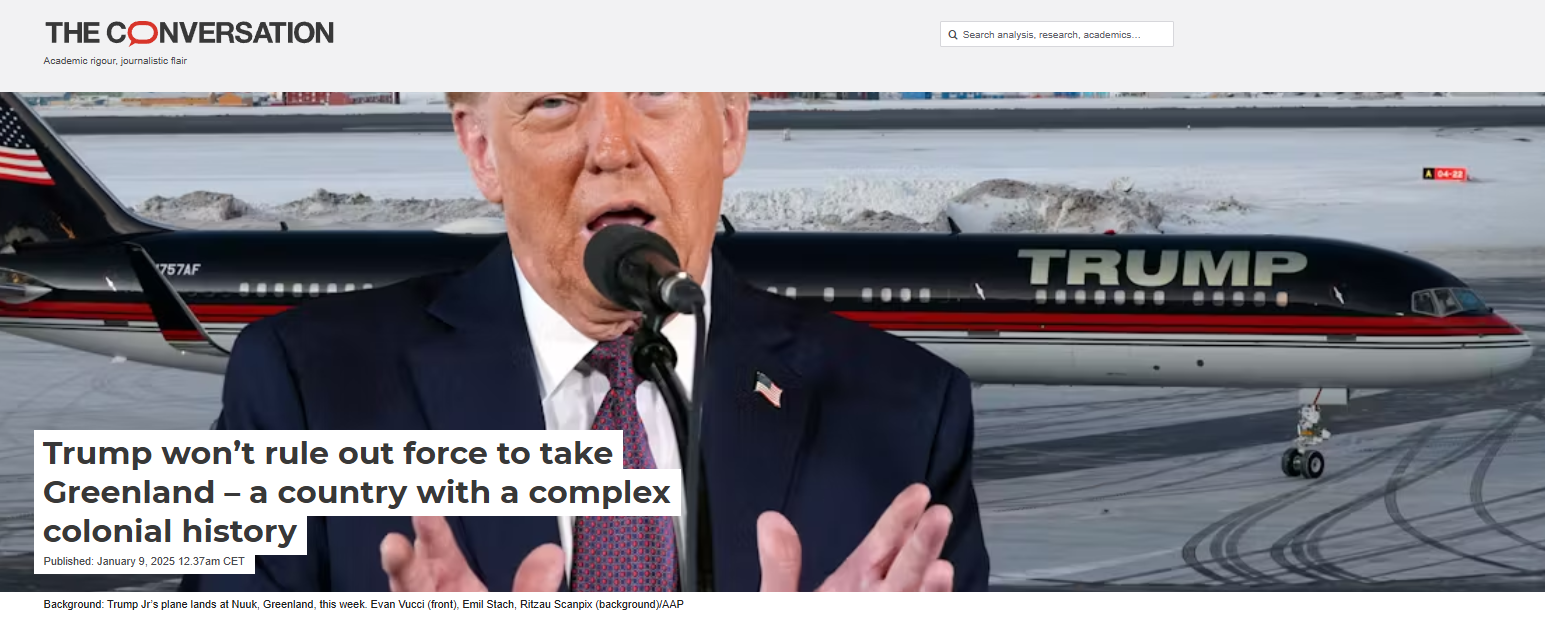
In Trump 2.0, with a circle of sycophants around him (no more “adults in the room”) and the chorus of obsequious media magnates, there seems to be the expansion of transgression to the foreign policy domain as well. We already know that Trump doesn’t care about norms, and seeing how transgression has paid off in the domestic sphere, why not turn to foreign policy?
After all, there is a lot of evidence of Trump being bored with the minutiae of the presidential job and seeming to enjoy the foreign policy pomp with adulating dictators on his side. If he is allowed to violate the rules at home, why not abroad? Trump’s boredom with the finer points of governance and his attraction to the grandeur of international politics could lead to even greater rule-breaking on the global stage. American foreign policy has already a “tradition” of norm violations (cough, Iraq, cough). As Putin invades Ukraine—justifying it as reclaiming ancestral lands—Trump and his allies might find inspiration.
In short, if I were Canada—or Mexico, Greenland, Panama—I’d be worried.

Elizaveta Gaufman is an Assistant Professor in the Research Centre for the Study of Democratic Cultures and Politics at the University of Groningen. Her research is situated at the intersection of political theory, international relations, media, and cultural studies. She is on Bsky: https://bsky.app/profile/lisares.bsky.social

 POP
POP 