Tanja Wolf is the author of this post for POP. Her research interests concern the right-wing parties in Europe as well as right-wing populism and extremism. She also studies left-wing propaganda, especially in former socialist or communist states. She works at the Julius-Maximilians-Universität in Würzburg, Germany.
In this article she investigates the case of Alternative für Deutschland and its peculiarity when compared with traditional right-wing parties in Germany.
One can read the results of the elections in seven Italian regions from a national perspective, even if this is an exercise that does not guarantee any consistent prediction. However, it can provide some important clues of what will happen in the future.
First of all, the results in the figure below are not complete. In fact, the results of single parties are not there: in regional elections, mainstream parties are linked to small local coalitions and minor parties. Therefore, the candidates of major parties always receive support from other lists, and the single party (e.g. Lega Nord in Veneto: 17.82% out of a total 50.08%) scores lower than that shown in the chart. Continue reading →
Laura Mackenzie‘s new article for POP investigates the different results of UKIP and the British National Party over time. What does explain their opposite degrees of normalization and success within the British political landscape?
“We are saying to BNP voters, if you are voting BNP because you are frustrated, upset with the change in your community, but you are doing it holding your nose, because you don’t agree with their racist agenda, come and vote for us”. Thus spake Nigel Farage, leader of the UK’s largest populist party, the United Kingdom Independence Party (UKIP), in 2014.
Since then, Farage has claimed to have taken a third of supporters from the populist radical right British National Party (BNP), and his party is enjoying its highest ever level of support since its creation in 1993, having received over 12% of the national vote (nearly 4 million votes) at the general election held on 7th May 2015. In contrast, the BNP received just over 1,500 votes, down 99.7% since the last general election in 2010. Is this downward trend in support for the BNP evidence that UKIP has made good on its promises to be the voice of those who are “frustrated [and] upset with the change in [their] community”? Or has this declining interest merely indicated an inability of the BNP to achieve lasting political and social legitimacy?
The BNP was formed in 1982, based on the principles of the original National Front: national sovereignty; withdrawal from the European Economic Community; a reconfiguration of the British Commonwealth into an association of white ethnic groups; enforced repatriation of non-Europeans; economic nationalism; etc. The party failed to make any headway throughout the Margaret Thatcher years in the 1980s and early 1990s, with collective support for the far right averaging at approximately 1% during this period. The party was characterised by an incoherent electoral strategy, contesting elections sporadically and finding support inconsistent at the local level (in 1984, a BNP candidate polled almost 12% of the vote in a council by-election in Sunderland, in the north of England; in contrast, in a by-election in Plymouth in the south in the same year, another candidate received only 15 votes).
Father Coughlin knew how to use the radio and he used it to deliver his messages to millions of people. First he supported Roosevelt and the New Deal, but later criticized him because of his relationships with the bankers. I would be curious to interview Charles Edward Coughlin now, in 2015, and to listen from his energetic, mesmerizing voice, what he thinks about the situation in Europe. Another cycle of economic recession, another time of social unrest. An age of barriers, drifting boats, night marches, proclamations.
Father Coughlin was particularly harsh with Jewish bankers, accused of being behind the Russian Revolution, and ended up backing Adolf Hitler and Benito Mussolini concerning social and political measures against both capitalism and Communism.
At the Congress, he once said, it is time to endorse a candidate ‘who can rise above his party and puts patriotism first. He may be a Democrat or a Republican or whatnot, but we’re through with the sham battle of politicians and now we’re on our own’.
In 2015, in Europe, it is time for important decisions, and the soul of Coughlin’s speeches resonates with our time, ominously, through new politicians. About democracy, and the way it was not able to prevent the great Depression, he said: ‘somebody must be blamed, of course. But those in power always forget to blame themselves. (…) And democracy once more, thinking that it has power within its soul, shall rise up to clap and applaud, because the youth of the land is going abroad to make the world safe for what? Safe for dictatorship? Safe against communism abroad when we have communism at home? Safe from socialism in France when we have socialism in America? Or safe, safe for the international bankers?’
I wanted to talk about the last elections in Poland and in Spain, about PEGIDA in Germany and Salvini in Italy, but there will be time for that. Now, I just wanted to hear father Coughlin’s words again, because those who cannot learn from history are doomed to repeat it.
Will Finland join the ‘club’ of the European countries which include a populist party in their government?
A few days more and we will have the answer.
For sure, something changed in Scandinavia after the results of the Swedish Democrats in September 2014 and the Finnish elections last week. Moreover, in 2014 the Danish People’s Party received 26,6% of the votes for the European Parliament, more than any other Danish party, and the Progress Party in Norway became for the first time part of the government in 2013, even if it obtained better results in previous elections. Continue reading →
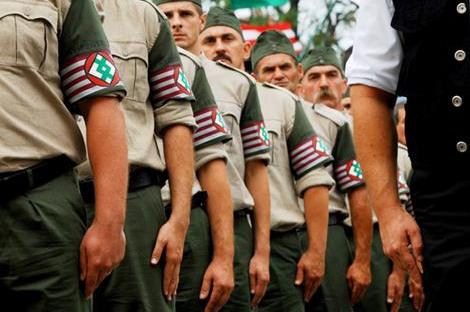
Jobbik, the Movement for a Better Hungary (Jobbik Magyarországért Mozgalom), looks like Golden Dawn from a political perspective, but gained more credibility than the Greek goodfellas. In 2014 they obtained 20.54% of the votes, winning 23 seats in Parliament. In April 2015, Jobbik has won its first ever individual constituency in Parliament (by-election), taking the Tapolca seat with a narrow majority. People in Tapolca must be pretty bored, but this is understandable since the only attraction in the small city is represented by a 300-metre-long cave system.
What is astonishing is that the rest of the country hardly resists to the temptation of hearing this mermaid-neo-fascist-song. It is true that Jobbik has softened its rhetoric in recent years, gaining mainstream support. (For a visual proof, confront the two spots, from 2010 and 2014: here and here).
This is the first of many interviews that POP will propose in the next months. Scholars, journalists, politicians and experts will answer timing questions about the nature and development of populism. For this first interview, we have Samuele Mazzolini. He is a PhD candidate in Ideology and Discourse Analysis at the University of Essex. His research focuses on the declining hegemony of the Italian Left, read through the lenses of post-Marxist discourse theory. He is also interested in Latin American and European left-wing populism. He previously worked for the Ecuadorian government and is now a regular columnist of the state-owned daily newspaper El Telégrafo. He is also a blogger for the Italian newspaper Il Fatto Quotidiano.
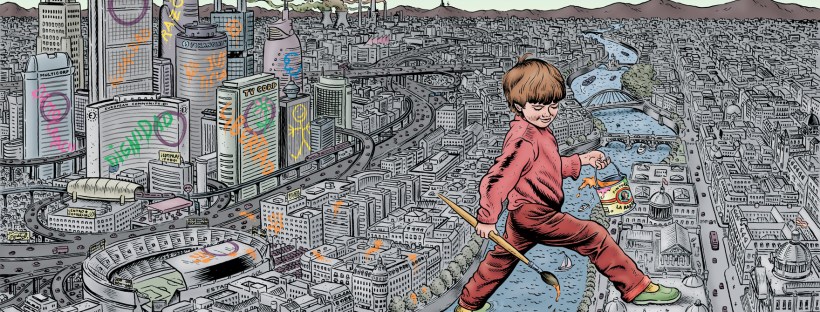
What is going on in Germany? The country which is supposed to lead European’s economy is plagued by anti-Muslim movements like Pegida, several important strikes (the last one from the Lufthansa pilots), and today the Blockupy movement protests in Frankfurt. They demonstrate against the inauguration of the headquarters of the European Central Bank, hosted in the new Eurotower.
Blockupy is an anti-capitalist network including around 90 organizations from several European countries, showing interesting similitudes of style and content with the protests against the WTO in Seattle in 1999.
With a populist touch, they want to ”draw attention to ECB policies which, they say, have favored the rich over the poor, the banks over the people, the creditor class over debtors – policies that have amounted to bailing out irresponsible financiers at the expense of ordinary citizens”.
Imagine. It is a rainy Tuesday evening. You realize that you wanted to tidy up the attic since a long time. Imagine. You find an old box. You open it, and a huge quantity of paper bobs up. And then you remember: your grandmother always told you that once, in the old times, the newspapers were printed. From your perspective, from a rainy Tuesday evening in the 22nd century, it is pure madness. You are curious, though. You just grab the first on top of the heap.
You open it. A stale smell of dust and ink. Page five. An article about the European Parliament. Yes, you think, you heard of that. Probably from your grandma. You start reading.Continue reading →

 Tanja Wolf is the author of this post for POP. Her research interests concern the right-wing parties in Europe as well as right-wing populism and extremism. She also studies left-wing propaganda, especially in former socialist or communist states. She works at the Julius-Maximilians-Universität in Würzburg, Germany.







 What is going on in Germany? The country which is supposed to lead European’s economy is plagued by anti-Muslim movements like


 POP
POP 