An Introduction to Populism (Again…)

Populism isn’t just another political buzzword (well, it’s also that…)—but it is an important tool to understand today’s world, if used correctly. The problem? Everyone talks about populism, but few can actually pin down what it is. Is it a dangerous threat to democracy—or a much-needed wake-up call? Is it ideology, performance, strategy… or all of the above? Who counts as “the people,” and who are “the elites”?

Enter Populism: An Introduction. This isn’t another academic doorstop—it’s an accessible guide that cuts through the noise. Written by leading scholars but crafted for students, readers, and anyone curious about the forces reshaping our world, it connects big theories with real-world politics in a way that finally clicks. If you’ve ever wanted to go beyond the headlines and actually understand how populism works—and why it matters right now—this is the book.

Professors everywhere are being asked to explain what it is, why it matters, and how it’s reshaping politics across the globe. The problem? Most readings are either too dense, too narrow, or too disconnected from what students actually want to learn. That’s why Populism: An Introduction is such a game-changer. Finally, a resource that makes teaching populism not just possible, but exciting. It reminds me in more than a way of my own The Populism Interviews, but with a different approach.

And now, the editors themselves explain how they pulled it off.

Enjoy the read!

Continue reading

Do we need yet another handbook on populism?

Populism has been one of the most debated topics in contemporary political science, drawing waves of scholarly attention after major global events. In particular, the dual shocks of Brexit and Donald Trump’s election in 2016 cemented populism as a central topic of political analysis—often leading to its use as a buzzword rather than a useful tool for understanding the world we live in. The explosion of academic research, resulting in numerous books, journal articles, and dedicated scholarly journals, hasn’t always seemed necessary, to say the least. This raises the question: do we need yet another handbook on populism?

The recent publication of the Research Handbook on Populism, edited by Yannis Stavrakakis and Giorgos Katsambekis, demonstrates that the academic field continues to evolve. This handbook seeks to provide a comprehensive and theoretically nuanced examination of populism, incorporating various perspectives and disciplinary approaches. It covers the four dominant frameworks in populism studies—the ideational, discourse-theoretical, strategic, and socio-cultural approaches—while also integrating historical analyses and contributions from diverse academic fields such as political economy, international relations, and psychoanalysis.

This article, written by Antonis Galanopoulos, explores the significance of this new handbook within the broader landscape of populism studies, assessing the unique contributions of the handbook, its methodological pluralism, and its efforts to address gaps in existing literature. Furthermore, it critically examines its strengths and potential limitations, considering how it shapes future research directions in the study of populism.

And to fill the gap identified by Antonis, namely the lack of a guide on how to navigate the chaos created by the recent populism boom and consequent hype, well…there are always The Populism Interviews for that 😉

Enjoy the read…

Continue reading

Interview #68 – Alternative for Germany and the “Weaponization” of History

The rise of populist radical right movements goes hand in hand with the politicization of history. Historical narratives are powerful tools that can shape public perception, reinforce ideologies, and legitimize political agendas. Focusing on the Alternative for Germany (AfD), we discuss with Matthias Dilling and Félix Krawatzek how the party’s strategic engagement with Germany’s collective memory intersects with broader trends in Europe and beyond.

From Milei’s nostalgic vision for Argentina to Romania’s recent electoral scandals that brought back echoes of the country’s fascist and communist past, history is a battleground for defining national identity and social values.

The interview sheds light on the role of the past in shaping the future, offering critical insights into the challenges posed by historical revisionism and the opportunities for fostering a more informed public discourse.

Enjoy the read…

Continue reading

Trump’s Carnival: Grabbing the world by the norms

In this article, Lisa Gaufman presents her (open access) book The Trump Carnival: Populism, Transgression and the Far Right, written with Bharath Ganesh.

Donald Trump’s political philosophy is often overshadowed by the sheer volume of his controversies. Yet at its heart lies a carnival of transgressions—norm-breaking, taboo-violating, and hierarchy-flipping—that has shaped the far-right’s approach to democracy.

As his rhetoric grows bolder and his disregard for rules extends from domestic to foreign policy, understanding the Trump carnival is essential to grasp the erosion of democratic norms in the U.S. and beyond.

His imperialist designs are part of a broader approach to politics, democracy, and foreign policy.

Enjoy the read…

Continue reading

Interview #67 – Exploring Left-Wing Nationalism

In this thought-provoking interview, Jacopo Custodi challenges conventional ideas about nationalism by shedding light on its role within left-wing ideologies. Often associated with the right, nationalism is far from incompatible with progressive politics. Drawing from his latest book, Custodi discusses how left-wing nationalism manifests in diverse ways across European contexts, specifically in Southern Europe. We discuss the distinctions between left- and right-wing nationalism, the nuanced ways leftist parties engage with national identity, and the interplay between nationalism and populism. Reclaiming a sense of nationhood can serve progressive goals—though it requires careful balancing to avoid the pitfalls of exclusionary nationalism.

Enjoy the read…

Continue reading

Interview #66 – Depopulation and Its Impact on Voting in Spain

In this interview, Álvaro Sánchez-García explains the complex interplay between depopulation, political polarization, and voting behaviour in rural Spain. Drawing from his research, Álvaro challenges common assumptions about the political inclinations of depopulated areas, suggesting that rural grievances in Spain extend beyond economic anxiety. Rather, depopulation itself—paired with a sense of community loss—fuels a unique discontent that influences support for various political factions, not just the radical right.

The interview offers a detailed analysis of how shifts in demographics, amenities, and population density shape political preferences. While mainstream conservative parties have historically benefited from depopulation, when this decline intensifies, parties like VOX gain traction, positioning themselves as advocates for rural interests. This conversation provides an in-depth look at the rural-urban cleavage’s resurgence in Spain, underscoring the ways global shifts and depopulation drive new forms of political expression and local identity.

Enjoy the read…

Continue reading

Portuguese Populism – A Special Issue

Populism in Portugal: the End of Exceptionalism?

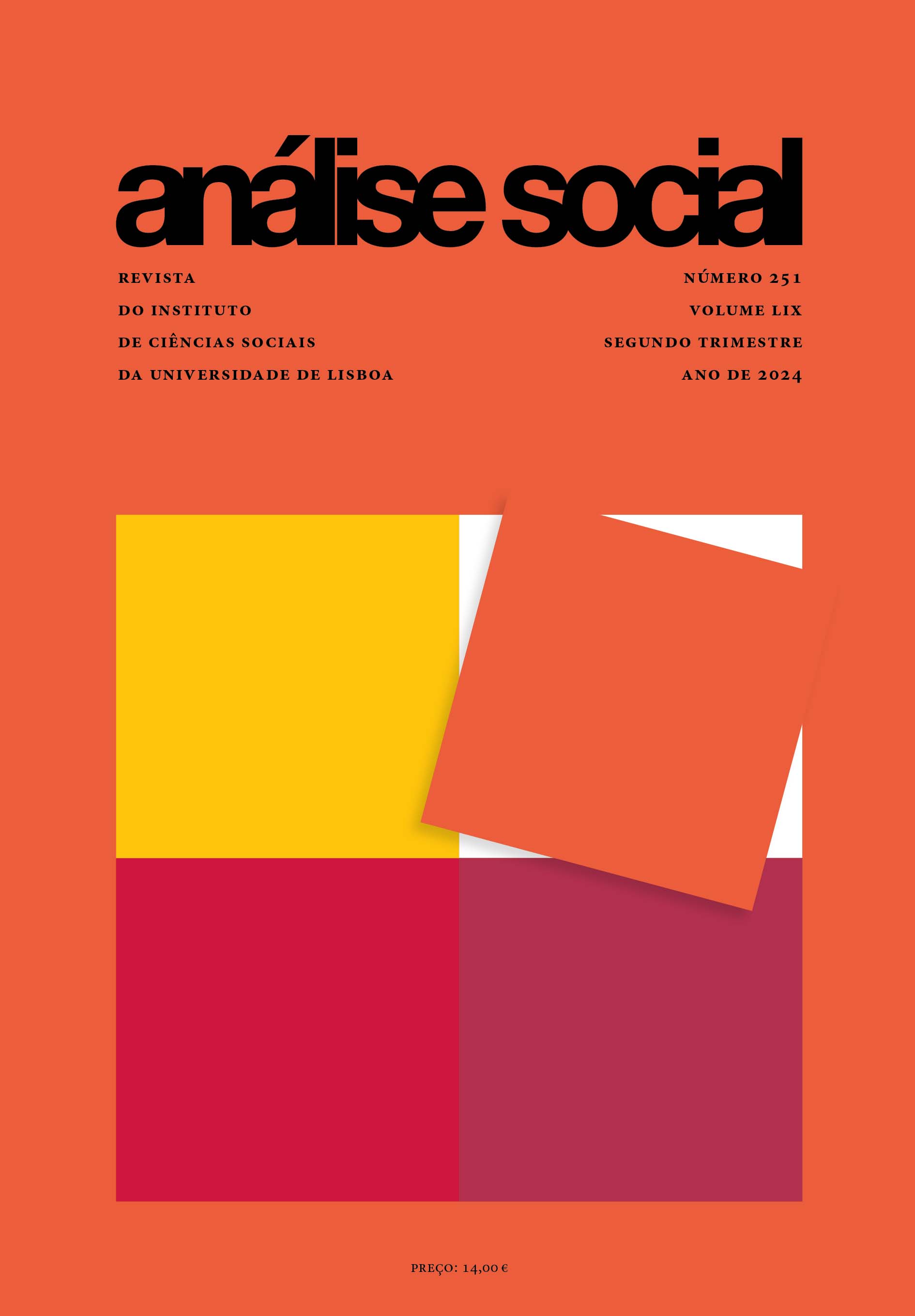
This is the title of the special issue I have been working on as a guest editor since 2022. I am glad to announce that it is finally out for Análise Social, the oldest Portuguese journal in social sciences, and house journal of the Institute of Social Sciences of the University of Lisbon. Half a century after the Carnation Revolution, this is an excellent moment to investigate the presence of populism in a country often considered immune.

The special issue is composed of an introduction and eight research articles: it can be found here in open access, both in Portuguese and English. I hope it will fill some of the gaps that have hitherto characterized the study of populism in Portugal and at the same time offer a starting point for anyone interested in working on these issues.

cover_issue_1796_pt_PT

Continue reading

Interview #65 – AfD and the end of German Exceptionalism

Germany has long been viewed as *the* model for reckoning with past atrocities—particularly through its atonement for the Holocaust and the creation of a public space steeped in historical reflection and contrition. Unlike Italy, for example, Germany has made its national memory a central pillar of its identity. However, this commitment to remembrance is now producing some unforeseen challenges.

For example, the legacy of the Holocaust makes critical public discussions about the actions of the Israeli government very difficult. At the same time, antisemitism, which has never fully disappeared, is once again on the rise.

In November 2023, members of the far-right party AfD were caught in a secret meeting discussing a “master plan” for the mass deportation of foreigners and “non-assimilated” Germans. When the news broke in January 2024, over a million people took to the streets across Germany to protest extremism and AfD’s ideology.

While the widespread mobilization in defense of democracy is heartening, it’s equally concerning that a party like AfD—which would have been considered taboo just a decade ago—has not only gained traction but may even be poised for government in the near future.

So, how did AfD become the third-largest political force in Germany? And is the country’s democratic cordon sanitaire strong enough to hold?

This interview delves into these questions and more with political expert Manès Weisskircher.

Enjoy the read.

Continue reading

Interview #64 – Populism and Constitutional Resilience

The impact of populists in power is always a much-debated topic. There are the apocalyptics, who predict locusts and other misfortunes every time a populist comes to power. Then there are those like Jasmin Sarah König, who analyse the data, observe the context, and draw conclusions by considering the pros and cons, situations and characteristics of the actors involved, and the systems in which these processes occur.

For example, Jasmin argues that when they are part of coalition governments, populist parties cannot simply implement the policies they want. When there are proper political checks and balances – not only through judicial institutions but through other political parties or organizations – possible negative consequences of populism can be contained.

She studied in detail whether the legislation initiated by the populist radical right FPÖ is unconstitutional more often than the laws initiated by other parties. The findings suggest that the FPÖ did not transgress constitutional boundaries more often than other parties because populist radical right parties can be forced to moderate when they need to compromise with a coalition partner.

Because, in the end, our constitutions are neither solid nor weak: they are just paper. It’s up to us to protect them.

Enjoy the read…

Continue reading

Interview #63 – Smashing the Establishment

What are anti-establishment parties, and what do they have to do with populism? Can they also be technocratic? How have they been evolving over time? Are all parties equally credible when they produce a political message against the status quo? Can ‘normal’ parties become populist? We discuss all these issues – but also the evolution of the German AfD, Margaret Canovan, and the populist Zeitgeist – in this interview with Bartek Pytlas.

Enjoy the read.

Continue reading