
Populism in Portugal: the End of Exceptionalism?
This is the title of the special issue I have been working on as a guest editor since 2022. I am glad to announce that it is finally out for Análise Social, the oldest Portuguese journal in social sciences, and house journal of the Institute of Social Sciences of the University of Lisbon. Half a century after the Carnation Revolution, this is an excellent moment to investigate the presence of populism in a country often considered immune.
The special issue is composed of an introduction and eight research articles: it can be found here in open access, both in Portuguese and English. I hope it will fill some of the gaps that have hitherto characterized the study of populism in Portugal and at the same time offer a starting point for anyone interested in working on these issues.
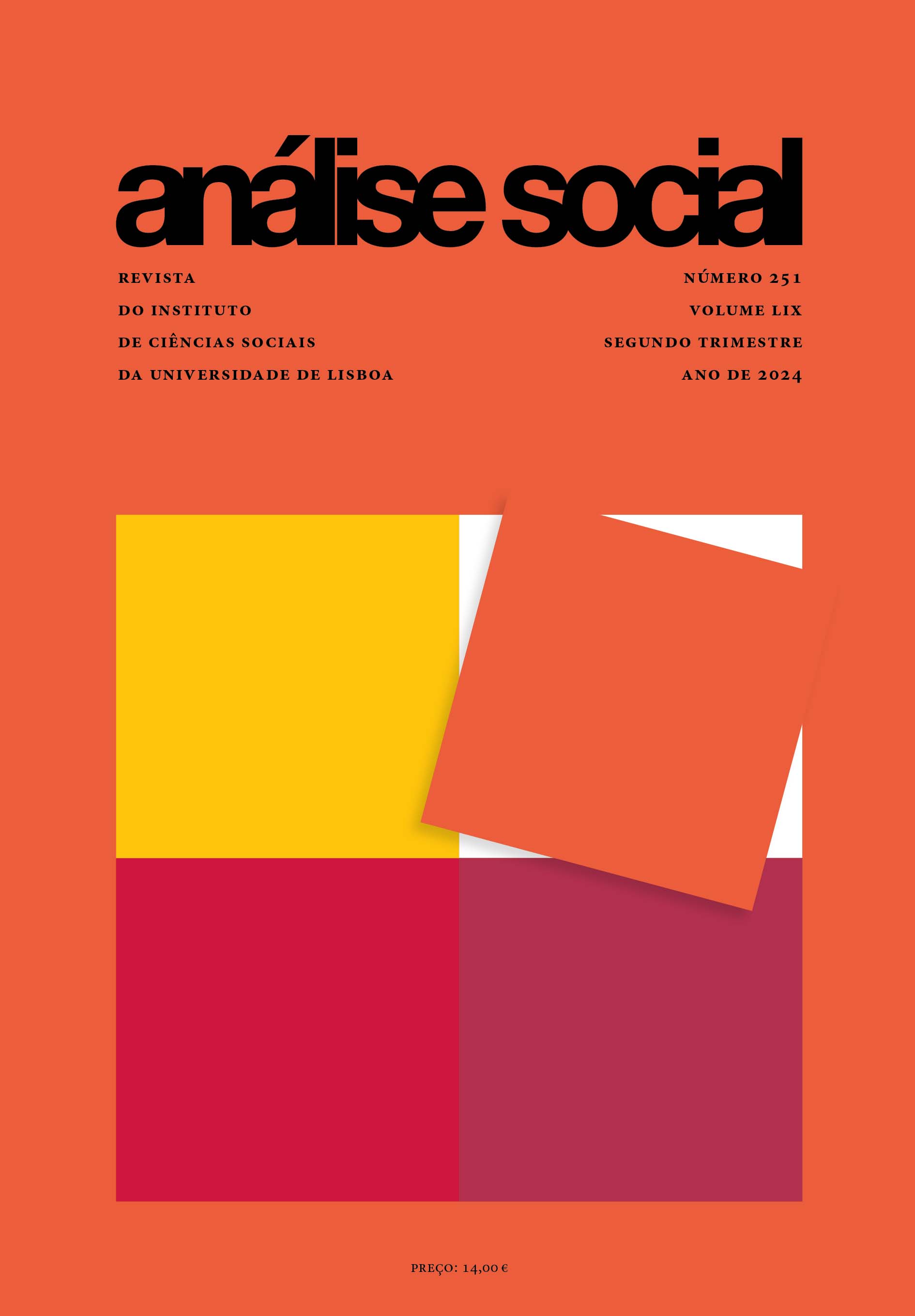
We start with the special issue’s introduction Portuguese populism: People, parties, and politics. Here I offer an overview of the so-called ‘Portuguese exception’ and present all the articles composing the special issue. Below you can find an excerpt of the introduction.
Then, Populism in the “mild-mannered” country – a history of Portuguese twentieth-century populist moments (1917-1976) undermines the idea of a non-populist Portugal. This article shows that Portugal was never truly exceptional. Since the 1st Republic, several movements and charismatic leaders have been characterized as populist.
We then move into the territory of religious populism and its links to populism in Portugal. Religious populism in Portugal: The cases of Chega! and CDS – People’s Party describes a crucial moment: when in 2017 André Ventura made remarks about the Roma community that led CDS to withdraw its support for his candidacy, religious populism in Portugal took two different paths, as you can read here.
Next, we have an article analyzing the public debate in Portugal regarding populism. Calling a spade a spade: the concept of populism in the Portuguese press shows that populism was present in the political debate long before 2019. The article analyses how the Portuguese media talked about this phenomenon during the decade 2012-2021.

A content analysis of parliamentary speeches finds that – during the first year of the pandemic – there was a significant decrease in populism. To know more, read Much ado about nothing? The covid-19 pandemic and the spread of populist discourse in Portugal
The next topic is abstentionism, a key feature of Portuguese politics. Between exit and voice. Differential factors of abstentionists and populist voters in Portugal looks into the link between populism and abstention. This work shows that populist citizens share several characteristics with abstentionists (including democratic dissatisfaction and Euroscepticism) but are interested in politics.

The ticking bomb of abstention. 7 out of 10 Portuguese did not vote in the last European elections. Lisbon, September 2024.
Populist attitudes and the populist radical right vote in different types of elections: evidence from Portugal shows that populist attitudes increased the odds of voting for André Ventura in the presidential election but had no impact on legislative elections.
Digging to the roots: populist attitudes and personality traits in Portugal connects populist attitudes to a variety of traits from the Big Five personality test. The authors of this paper show that populist citizens seek political participation to reduce perceived risks which, in turn, often leads to a preference for quick, simple solutions over complex problem-solving.
Finally, we move to an analysis of Chega’s members, with Far-right populism in Portugal: The political culture of Chega’s members. Chega members are mostly religious men from the Lisbon metropolitan area. They are interested in politics and most of them never had a party affiliation before Chega, the authors claim.
Before leaving you to the special issue, I want to thank all the colleagues involved, the journal editors, the editorial assistant Marta Castelo Branco, the participants in RIGOP and SPARC seminars, and their organizers Roberto Falanga and Edalina Sanches.
While we are here, it is worth mentioning that I have been working on topics connected to the so-called Iberian exceptionalism since 2019. I have analyzed the authoritarian legacies in Spain and Portugal in connection to the populist radical right (here). I studied the demand for populist radical right parties like VOX and Chega (here) as well the supply side of things, exploring how VOX and Chega position themselves within the space of competition and cleavages characterizing the Spanish and Portuguese party systems (here). More research on these topics is going to be published in the next weeks, so stay tuned.
Here below you can find the beginning of the Introduction I wrote for the special issue, enjoy the read.
Portuguese populism: People, parties, and politics
For a long time after the Carnation Revolution (1974) and the ensuing democratic transition, Portugal was considered an exception in Europe due to the electoral irrelevance of populism. The so-called “Portuguese exceptionalism” ended in 2019 with the entry of Chega into parliament but, as this special issue shows, there are good reasons to believe that Portugal was never truly exceptional.
By examining political parties, media influence, and individual attitudes – thereby covering macro, meso, and micro factors in the spread of populism – this special issue serves as a crucial reference for the study of Portuguese populism. Besides, it also provides valuable lessons for those interested in populism far beyond the Iberian peninsula. Bringing together some of the best scholars in the field, this special issue explores – among other topics – the history of Portuguese populism, its evolution over time, including the role of the pandemic, its connection to religion, as well as the relationship between populist and protest attitudes.
From an exceptional case to a country where populism is rapidly becoming a crucial factor in understanding the political landscape, one of the least studied cases may finally become the key to providing fundamental answers and interpretations to understand the role of populism in contemporary societies across Europe.
Indeed, Portugal remains an under-researched case, with few comparative studies including the country and even fewer studies focusing exclusively on Portugal. Even compared to Spain, another Iberian country that until recently was supposedly immune to the populist radical right, Portugal has received less attention. In the case of Spain, studies on both left-wing and right-wing populism are abundant, with a burgeoning literature studying populist parties such as Podemos (Custodi, 2021; Gomez and Ramiro, 2019), Ciudadanos (Orriols and Cordero, 2016), and vox (Marcos-Marne, Plaza-Colodro and O’Flynn, 2021; Rama et al., 2021; Turnbull-Dugarte, Rama and Santana, 2020). At the time of writing this introduction, nothing remotely comparable has been produced on Portuguese populism. This special issue aims to (begin to) fill this gap.
Culturally and geographically, Portugal is smaller and more peripheral than Spain. Nonetheless, as this special issue illustrates, Portugal presents a fascinating case that offers valuable lessons for studying populism across Europe and beyond. In just five years, the Portuguese political system has undergone profound changes: the end of bipartisanship, the normalisation of the populist radical right, the struggle of radical left parties, and the challenges faced by mainstream parties between corruption scandals and growing competition, among others. The first six months of 2024 have already seen early elections in March, the 50th anniversary of the Carnation Revolution in April, and the European elections in June. New parties are trying to emerge, while old ones are trying to stay relevant.
The political landscape that emerged from the Carnation Revolution fifty years ago, so stable for so many decades (Jalali, 2018), no longer exists. Populism is now a key component of Portuguese political life and public debate, and it is here to stay. In a context of increasing electoral volatility, low voter turnout, lack of trust in political parties, and high levels of democratic dissatisfaction, populism can find a fertile ground and shape the Portuguese political system. The eight articles in this special issue aim to answer key questions: How did we get here? What will happen in the future? And what can we learn from the end of the so-called Portuguese exceptionalism?
THE END OF PORTUGUESE EXCEPTIONALISM?
This special issue, entitled “Populism in Portugal: The end of exceptionalism?”, offers an overview of the state of the art of populism studies in Portugal and clearly shows that Portugal is a country with widespread populist attitudes among the population, where several political actors have articulated populist discourses over time. Hence, it seems that Portugal was never completely exceptional after all. What it has lacked, compared to most European countries, is the electoral breakthrough of populist radical right parties, but this is probably due to the lack of a credible supply.
With Chega’s entry into the Assembleia de República in 2019, even this last exceptional feature has disappeared, and Portugal entered a new political phase that brings it into line with the rest of the continent. This “exceptional situation” was probably the result of long-lasting legacies of the authoritarian past rather than the absence of populism (Manucci, 2020; Mendes and Dennison, 2021). Previous studies suggest that populism existed before Chega, both as an individual attitude (Santana-Pereira and Cancela, 2021) and as a political discourse, especially on the radical left side of the political spectrum (Lisi and Borghetto, 2018; Carreira da Silva, Manucci and Veloso Larraz, 2022).
The article by Gonçalves (2024) included in this collection, confirms that since the Portuguese First Republic (1910-1926), several movements and charismatic leaderships can be characterised as populist. Three stand out. Sidónio Pais, President of the Republic (1917-1918), was dubbed “the father of the poor” and relied on a gendered notion of charisma. Similarly, Humberto Delgado’s presidential candidacy in 1958 as the leader of the democratic opposition to Salazar’s Estado Novo was characterised by military machismo and appeals to the masses. Finally, the post-revolutionary movements led by Otelo Saraiva de Carvalho and Ramalho Eanes in the aftermath of the 1976 presidential election claimed to put the interests of the people before their own, running to defend both national identity and the conquests of the Revolution. Interestingly, these three Portuguese (proto-)populists inspired each other and made more or less explicit reference to those who came before them in this path of populist politics that steered away from radical right policies, perhaps creating the myth of Portuguese exceptionalism.
Continue to read the introduction to the special issue here…


 POP
POP 